Showing posts with label Alexandria. Show all posts

Tuesday, July 28, 2015

Civil War News and Views: The Advanced Confederate Line, September 1861

Now that the Sesquicentennial is over, I look forward to revisiting the earlier war period in Northern Virginia. As readers may recall, I spent a lot of time a few years ago examining the Confederate advance closer to Washington at the end of August 1861, when forces under Gen. James Longstreet occupied the high ground on Munson's Hill and Mason's Hill. Not long ago I came across the following report from the September 6, 1861 edition of the Richmond Daily Dispatch concerning the new position within sight of Washington:
Confederate States Army, Fairfax Station, Va., Sept. 1 
Last evening I returned from Mason's Hill, seven miles south of Washington, D. C. Mason's Hill derives its name from the gentleman's name (Capt. Mason, now in the Confederate service at Norfolk, Va.,) who is the proprietor. Mason's Hill is a very high and commanding position, and about two miles from Munson's Hill, both of which are now fortified and in possession of the ‘"rebels."’ 
In a straight line from Mason's Hill stands the Capitol at Washington, and which can readily be seen with the naked eye. Whilst beholding the dome of the Capitol, I feel like one looking upon the ‘"promised land,"’ where shortly, I hope, ‘"may our possessions be."’ I had the pleasure of seeing Prof. Lowe's balloon, and am sure his observations were of little account to him. The Yankee experiment of ballooning came near receiving a great ‘"pull back,"’ by the firing upon the balloon spy by the Washington Artillery. Several shots were fired at it, when it immediately ‘"went down."’ Don't suppose, however, ‘"anybody was hurt."’ But, nevertheless. somebody was scared, for the balloon suddenly disappeared and did not come up again.
Camping at Mason's Hill is interesting and exciting — not a day passing away but a few Yankee pickets ‘"bite the dust."’ Whilst I was there, in one day eight were gathered by our boys, who keep a sharp lookout for the chaps, and give them a dead shot on sight — Several prisoners have been sent to General Davis' institution at Richmond for safe keeping. By the way, we will soon have a Yankee army on hand. 
On the morning of the 30th a large Federal camp, about two miles from Alexandria, broke up and retired, thinking, probably, the ‘"rebels"’ were getting too close for comfort.--They built a large fire, the smoke of which served to cover them as they broke up their camp.
Fine views are obtained from both Munson's and Mason's Hills, of the surrounding country, and also of the Potomac. Upon the Potomac, large vessels.
There has been considerable sickness in our camp; but, with the cool weather, the health of all the men is improving, and all will be on their feet soon, with musket in hand. No news at present that I dare tell you. Pen.
N. B.--Envelopes are very scarce. The man who goes into the manufactory of envelopes in the South, will make a fortune P. (courtesy of Perseus Digital Library)
An engraving of the Confederate fortification on Munson's Hill, Illustrated London News, Oct. 5, 1861 (courtesy of Emory University).
Foreign correspondents also took an interest in the advanced Confederate line. A piece in the October 5, 1861 edition of the Illustrated London News, accompanying the above illustration, contained the following account of the Rebel position at Munson's Hill:
 This is the point in Virginia at which the Unionists and the Confederates are nearest each other, and whilst our Artist was making his sketch, crouched beneath the shelter of the foliage, within hailing distance of the enemy's pickets, a continual spattering of bullets fell round the spot. More than halfway up the road towards the hill is a barricade, from behind which a Secessionist sharpshooter is having some pot shots, and, screened by the hedges in the cornfields, others are doing the same. In the foreground are the Union advanced pickets, furnished by the Michigan Regiment, one of whom is in the act of firing at two or three men beyond the barricade. A Michigan soldier just shot lies in the road. The Confederates have some rifled cannon on the earthwork, and whenever they see a number of Federalists together they send in a dose of shells.
A New York paper thus describes the Confederate position on Munson's-hill:—"Munson's-hill is probably the highest eminence within ten miles of the Potomac, immediately opposite Washington. It is about six miles from the Capitol, the intervening space being covered with a succession of gently rolling hills, crowned principally with forest trees, although here and there dotted with churches, farmhouses, and country villages. The streams are unimportant and the roads dusty. The hill presents its most abrupt side towards the national capital, and, unlike those around, has but few trees on its summit. Many of those which originally existed have no doubt been felled while the intrenchments were in progress. At present an immense Confederate flag—the red, white, and blue stripes in which are at least five feet wide each—is the most prominent object upon the top of the eminence Two of the trees which have been allowed to remain were used as an observatory. The Confederate defences are constructed entirely of earth, fifteen feet being the highest elevation. The sloping hillside in front of the fort is clear of underbrush or trees, and is sufficiently extended to allow 3000 men to parade. The distance from the cover of the woods to the summit of the hill is not so great but that a quick movement would drive the enemy from their guns with very little loss of life. The flank defences of the fort consist of three batteries. It is believed that earthworks have been thrown up on another portion of the hill commanding the road to Fairfax Courthouse. The fort is intended more particularly to command the road leading from Alexandria to Falls Church, the road from Washington to Fairfax, just mentioned, the railroad from Alexandria to Vienna, and the position of Bailey's Cross-roads."
With little to report in the way of large-scale battles, newspapers turned their attention to the Confederate lines within view of the nation's capital. Munson's and Mason's Hills were popular topics. Add in the thrilling ascent of Lowe's balloons or the tension of the picket war, and correspondents had plenty of material to keep their readers interested and entertained. The Confederates abandoned the advanced position by the end of September 1861, and not long afterwards, both sides settled in for a long fall and winter in camp.

Wednesday, July 16, 2014

An Excursion to Ft. Ward for the 150th of Early's Raid on Washington

Last week marked the 150th anniversary of the Confederate raid on Washington. The National Park Service and local governments hosted a multitude of events to commemorate Gen. Jubal Early's daring advance into Maryland, his victory at Monocacy, and his failed attack on Ft. Stevens. I have been pretty busy recently, so I wasn't sure what, if anything, I could attend.  That said, I managed to find some time this past Sunday to go with my twin boys to the Ft. Ward Museum and Historic Site in Alexandria, which was holding a living history weekend to observe the Sesquicentennial of the Battle of Ft. Stevens. The fort is one of my all time favorite Civil War sites in the Washington area. I've seen a lot of living history events these past few years, but this one promised some great photo-ops and featured a concert by the renowned Federal City Brass Band. My boys also like the place as much as I do, and I thought they'd enjoy seeing and learning a few things about the Civil War while Mom was away at a meeting.

The camp of Co. K, 3rd U.S. Infantry, just outside the reconstructed gate of Ft. Ward.
The boys meet President Lincoln and Mary Todd.  Given that Old Abe personally observed the Battle of Ft. Stevens, I suppose you could say that his attendance at the event was a prerequisite!
Stacked rifles of Co. F, 2nd Rhode Island Infantry.
A view of the camp of Thompson's Independent Battery C near Ft. Ward's reconstructed northwest bastion. The howitzer seen here is usually positioned on an emplacement inside the bastion, but was moved to make way for a firing replica used in Saturday's reenactment of the Battle of Ft. Stevens.
Thompson's Battery's very own Parrott gun and limber inside the fort's northwest bastion.
Looking at the interior of the reconstructed northwest bastion. I never get tired of this site -- no other place related to the Defenses of Washington can compare!

Union reenactors from the 3rd U.S. Infantry held a skirmish drill on the museum's lawn.  Here, an officer explains the maneuvers to the crowd.
The reconstructed officers' hut at the fort was open for viewing. 
One of the exhibits at the event featured Civil War railroads. The living historian is pictured here with his collection of Civil War-era railroad relics such as spikes and link and pin coupling.
Jack enjoys the assortment of 19th century toys, including a cup-and-ball and Jacob's ladder.
The Federal City Brass Band plays on the lawn in front of the Ft. Ward Museum building. At the start of the concert, the group struck up Hail to the Chief  as Lincoln and the First Lady took their seats at the front of the audience. The group performed a wide array of patriotic tunes, including Battle Cry of Freedom and Yankee Doodle. The sound of period brass instruments on a hot summer day carried me right back to 19th century America.

All told, the commemorative event at Ft. Ward was a pleasant way to spend a Sunday afternoon in a picture-perfect, family-friendly setting. The museum did a commendable job of putting together an informative living history program, and I am sure that Saturday's reenactment of the attack on Ft. Stevens brought the battle alive for many. Such events go a long way to helping the public connect to and understand the Civil War, including my own very curious preschoolers!

Wednesday, June 25, 2014

Odds and Ends, June 2014

That time of the year has arrived once again. I am soon off to the Bay State for my family's annual pilgrimage, meaning that I will be on vacation from the blog for a little while. I plan to fit in some antebellum and Civil War-related sightseeing while I am away and promise to report back upon my return. As always, I will remain active on Facebook and Twitter as much as I can. In the meantime, here are a few odds and ends:

*The Sesquicentennial of Jubal Early's raid on Washington is fast approaching. In that vein, there are a myriad of activities being planned at the federal and local level:
The Monocacy National Battlefield will mark the 150th of the  "Battle that saved Washington" from July 5-13. Activities include "real time" walking tours, living history demonstrations, and a "Remembrance of the Fallen" program. Additional information can be found here. 
The Civil War Defenses of Washington unit of the National Park Service (NPS) will be commemorating the 150th anniversary of the Battle of Ft. Stevens, where President Lincoln himself came under fire. Highlights include walks and lectures, a hike in the nation's capital from Battery Kemble to Ft. Stevens, living history encampments, and a memorial program at Battlefield National Cemetery. See here for a full schedule. This flyer from the NPS lists numerous other commemorative activities in the Washington, DC area.  
One of my favorite local Civil War parks, Ft. Ward Museum & Historic Site, is hosting a "Battle of Fort Stevens Reenactment Weekend." Groups representing Union and Confederate regiments will recreate the engagement at the reconstructed northwest bastion of Ft. Ward, which will serve as a stand-in for Ft. Stevens. More details can be found here, on the museum website.

Modern view of restored portion of Ft. Stevens (courtesy of Wikipedia). The marker in front of the guns commemorates Lincoln's visit to the fort. 

*Readers may recall that I have recently written about the appointment of Lydia T. Atkinson to serve as a teacher at the contraband camp in Langley. (See here and here.) The Friends' Association for the Aid and Elevation of the Freedmen decided to send her to Camp Wadsworth upon finding egregious violations of rules governing labor by school-age children. Last month I discovered that the Friends Historical Library at Swarthmore College has Atkinson's diary from her time in Northern Virginia. I wrote to obtain copies and just received excepts on Monday. Needless to say, I am ecstatic. Atkinson's words shed some light into life at Camp Wadsworth from summer 1864 through the end of the war. I will be featuring a future post of two on the diary once I have had the opportunity to study and analyze this precious primary resource.

*And last but not least, I'd like to wish everyone a Happy Fourth of July!


Friday, January 24, 2014

Fairfax Civil War Events, January-March 2014

Living in Northern Virginia I sometimes feel like a spoiled child. On any given day, a museum, historical society, local government, or round table seems to be hosting a Civil War-related event. The Sesquicentennial has only increased the number of exhibitions and lectures available. Of all the local sponsors, the City of Fairfax has an active program of events for Civil War enthusiasts. As readers know, I will be speaking on February 9 about Fairfax's Civil War contraband camps as part of the "Second Sunday" series run by the Fairfax Museum and Visitor Center. The city is also sponsoring many other events between January and March. Here is a listing:

"Mosby’s Raids in Civil War Northern Virginia," January 25 at 2 p.m. 
Talk and book signing with local author William S. Connery, who explores the Civil War exploits of Confederate Col. John S. Mosby. Venue: Historic Blenheim and Civil War Interpretive Center,  3610 Old Lee Highway, Fairfax VA 22030.

"Hispanics in the American Civil War," February 22 at 2 p.m. 
Les Albers, U.S. Army veteran and Washington-Lee High School U.S. History teacher, will present a multi-media lesson focusing on the Hispanic participation in the American Civil War. Venue: Historic Blenheim.

"The Civil War Romance of Antonia Ford and Major Joseph C. Willard," March 9 at 2 p.m.
Fairfax Museum Curator Susan Inskeep Gray will tell the story of Antonia Ford, a suspected Confederate spy, and her courtship with Union Army officer Joseph Willard. Venue: Historic Blenheim.

"Confederate Memorial Day in Alexandria from 1866 to the Present," March 22 at 2 p.m.
Talk, book purchase, and signing by local historian and author, Ann Graham, who will trace the roots and continuation of the annual Confederate Memorial Day in Alexandria. Venue: Historic Blenheim.


For more information, see the City of Fairfax website (here). Historic Fairfax City, Inc. also provides event information (here). This year I plan to post more frequently about local Civil War events. With so much happening, I feel that these events sometimes escape people's attention. And as always, I'll report back with my impressions if I am able to attend.

Wednesday, November 27, 2013

Thanksgiving 1863 in Washington and Alexandria

President Lincoln issued a proclamation in October 1863 declaring the last Thursday of November as a national day of Thanksgiving. During the countdown to the holiday, Gen. Ulysses S. Grant defeated the Confederate Army of Tennessee in a series of engagements before Chattanooga. News of the Union victories began to appear in newspapers prior to Thanksgiving Day, providing the country with even more reason to give thanks.

Last week, I discussed how the residents of Washington City and Alexandria prepared to mark the Thanksgiving holiday in November 1863. Now, on the eve of our own family celebrations, I'd like to take a look at Thanksgiving Day observances in the two cities.

People in Washington and Alexandria awoke to stunning autumn weather on Thanksgiving morning, November 26. As the Washington National Republican observed: "The day dawned bright and beautiful. The atmosphere was cool and bracing. Every heart, therefore, leaped high with joyous thrillings." (Nov. 27, 1863.) Similarly, the Alexandria Gazette reported on November 27 that "[y]esterday was one of the most delightful days -- as to weather-- we have had this fall."

The Washington Evening Star provided an overview of the holiday in the nation's capital:
Yesterday being Thanksgiving day, it was celebrated by a general suspension of business throughout the city, and in accordance with the recommendation of the authorities was very generally observed. Services of an appropriate character were held at all the churches, and all were well attended. Others celebrated the day by attendance upon one or the other of the place of amusement, all of which were open. The street cars were filled on every trip, mostly by those who took the occasion for a ride from the Navy Yard to Georgetown and intervening points. The day was indeed recognized as one justly set apart for thanksgiving and joy on account of the many victories which have recently crowned the Union arms; and when about 12 o'clock, the extra Star appeared, announcing further victories and new causes of gratulations, the public felt indeed that the day was one for the exchange of gratulations and the pouring out of devout thanksgiving. (Nov. 27, 1863.)
The Gazette was a little less verbose, but also took note of the observance of Thanksgiving in Alexandria:
Business in this place was suspended yesterday. In the Methodist Episcopal, Methodist Protestant, and Christ Church, religious services were held and addresses delivered, and collections taken up for the Federal prisoners confined in Richmond. (Nov. 27, 1863.)
The National Republican devoted considerable space to summarizing the Thanksgiving Day sermons around town. Most notably, at the Calvary Baptist Church, the Rev. T.R. Howlett "preached an eloquent and truly patriotic sermon." (Wash. Natl. Rep., Nov. 27, 1863.) He thanked God "for the glorious results of our many victories." (Wash. Natl. Rep., Nov. 27, 1863.)  The paper observed that "[o]n this point, the speaker dwelt at some length, referring to several of the most important battles, closing with the last, the glad intelligence of which so appropriately reached the ears of a grateful people this very day." (Wash. Natl. Rep., Nov. 27, 1863.) Howlett also reminded his congregation about the meaning of the war :
We should today thank God for the brightening prospects of freedom. The conflict in which we are now engaged is to settle forever the principles of the Declaration of Independence. From the womb of the storm, universal liberty is to be  born. (Wash. Natl. Rep., Nov. 27, 1863.)

"Thanksgiving-Day," Harper's Weekly, Dec. 5, 1863, by Thomas Nast (courtesy of Gilder Lehrman Institute)
The patients in military hospitals throughout the capital also had an opportunity to partake in the Thanksgiving Day festivities. As the National Republican reported:
. . . suffice it to say that a merry time was enjoyed by all -- both patients and invited guests. There was a superfluity of turkeys, roast beef, plum pudding, and all the little etceteras which go to constitute a good sumptuous Thanksgiving dinner. In the afternoon the religious exercises were held by the chaplains, and in two or three a dance was held in the evening. We venture the assertion that the inmates of the hospitals of our city yesterday spent as happy a time as was possible for the surgeons-in-charge and the noble women of our city who act as nurses could possibly make them. (Nov. 27, 1863.)
At Emory Hospital east of the Capitol, "'Do they miss me at home' was on the lips of all." (Wash. Natl. Rep., Nov. 27, 1863.) The paper described some of the day's entertainment for the convalescing soldiers:
The band of the 15th New York discoursed the most exquisite music. "Yankee Doodle" and the "Star Spangled Banner" were rendered with a spirit we have seldom seen equalled. (Wash. Natl. Rep., Nov. 27, 1863.) 
The patients even presented assistant surgeon W.H. Ensign with "a splendid silver service, a pitcher, two goblets, and salver, exquisitely and appropriately engraved." (Wash. Natl. Rep., Nov. 27, 1863.)

Across the Potomac in Alexandria, the hospitals were also filled with holiday cheer. According to the Gazette, "several of the U.S. Hospitals were decorated, and in all of them, the inmates were provided with repasts." (Nov. 27, 1863.)

As in the previous two years, Thanksgiving provided welcome relief from the everyday routine of civilian and military life in and around the nation's capital. Grant's victories made the holiday that much more meaningful and offered hope for the future. Alas, another Thanksgiving would come and go before the bloodletting would end and the U.S. flag would waive once again over the capital of a reunited country.

On a personal note, I'd like to wish readers Happy Thanksgiving! See you in December! Be forewarned, however, that due to the end of the year rush to make trade deals, things may slow a bit around here next month. Regardless, I have a few good posts in the works that I hope to share.

Sources
Alexandria Gazette, Nov. 27, 1863; Washington Evening Star, Nov. 27, 1863; Washington National Republican, Nov. 27, 1863

Thursday, November 21, 2013

Preparing for Thanksgiving in Washington City and Alexandria, November 1863

Thanksgiving is one of my favorite holidays. Each year since starting the blog, I've taken a look at how the day was celebrated in and around the nation's capital at the time of the Civil War. As I wrote a few years ago, Thanksgiving was not yet a national holiday when the war began. Instead, individual states set aside a day in November to give thanks. Soldiers and civilians alike took the opportunity to observe the holiday with food, religious services, and numerous diversions.

This year marks the 150th anniversary of a key event in the history of Thanksgiving. On October 3, 1863, President Abraham Lincoln issued a proclamation designating the last Thursday in November "as a day of Thanksgiving and Praise to our beneficient Father who dwelleth in the Heavens." (Alex. Gazette, Oct. 5, 1863.) This proclamation laid the groundwork for the national holiday that we know today. (The full text of proclamation is available here.)

The country enthusiastically embraced Lincoln's call. By mid-November, the Alexandria Gazette reported:
Large preparations are making at the North for "Thanksgiving Day," 26th of November. Raisons [sic], lemons and grapes, &c., are arriving, opportunely, in vessels from Malaga, &c. (Alex. Gazette, Nov. 13, 1863.)
Residents in Washington found the stores well-stocked for the upcoming holiday. The Perpetual Market on H Street advertised the "finest lot in Washington" of turkeys and other birds for "THANKSGIVING DINNERS." (Wash. Evening Star, Nov. 24, 1863.) Meanwhile, the Philadelphia Provision Store on Pennsylvania Avenue offered for sale a "large lot of TURKIES, CHICKENS, DUCKS, and GAME of all kinds." (Wash. Evening Star, Nov. 24 1863.) A.M. Bininger & Co., also on Pennsylvania Avenue, announced "FOR THE HOLIDAYS. . . THE MOST COMPLETE ASSORTMENT OF WINE AND LIQUORS TO BE FOUND IN THE METROPOLIS." (Wash. Evening Star, Nov. 25, 1863.)


A play on President Lincoln's Thanksgiving Day Proclamation from a merchant in Washington City, Washington Evening Star, Nov. 25, 1863

Businesses adopted holiday operating hours in both Washington and Alexandria. The Gazette carried a notice informing readers that due to the "day of Thanksgiving and Prayer," the market in Alexandria would be closed on Thursday, November 26. Instead, the market would remain "open all day on the Wednesday preceding." (Alex. Gazette, Nov. 21, 1863.)  Similarly, the Center Market in Washington was scheduled to be open Wednesday afternoon, the 25th, rather than the next morning. (Wash. Evening Star, Nov. 25, 1863.) Gen. John Slough, the military governor of Alexandria, even issued a notice concerning proper commercial practices on Thanksgiving Day:
Thursday, the 26th inst., having been set apart by the proclamations of the President of the United States and the Governor of the State of Virginia as a day of thanksgiving and praise to Almighty God for his many blessings conferred on us as a people, so that the occasion may be properly observed, all citizens and soldiers in this command are notified that they will be expected, upon that day, to abstain from ordinary business pursuits except those unavoidably necessary. (Alex. Gazette, Nov. 24, 1863.)
No word on whether the provost marshal attempted to enforce Slough's notice, but whatever the case, today's big box retailers could learn a thing or two from our ancestors in 1863 about respecting the Thanksgiving holiday!
Family shopping for Thanksgiving Day turkey, c. 1860s (courtesy of PostersGuide)
The papers contained reminders of the religious nature of the holiday. Among the houses of worship in Washington, the E Street Baptist Church, the Unitarian Church, and the Wesley Chapel placed special notices about Thanksgiving Day services. (Wash. Evening Star, Nov. 25, 1863; Wash. Natl. Rep., Nov. 25, 1863.) The U.S. Christian Commission "made an appeal to the several pastors and congregations of the District to present the claims of the Commission on Thanksgiving Day, and take up a collection to aid them in their work." (Wash. Natl. Rep., Nov. 25, 1863.)

Thanksgiving Day also provided ample opportunity for fun and entertainment. The Evening Star noted that the Smithsonian Museum would be open to the public on Thanksgiving from 9 a.m. to 4 p.m. (Wash. Evening Star, Nov. 25, 1863.) Those who were more theatrically inclined had the option of attending one of the many performances around town. Ford's New Theatre on 10th Street was staging "TWO GRAND PERFORMANCES" of Po-Ca-Hon-Tas, or, Ye Gentle Savage on Thanksgiving Day. (Wash. Natl. Rep., Nov. 25, 1863.) Meanwhile, "THE ENTIRE ITALIAN OPERA COMPANY OF IMPRESARIO GRAU" was performing at Grover's Theatre near Willard's Hotel (today's National Theater). (Wash. Natl. Rep., Nov. 25, 1863.) For the more adventurous and sports-minded, the Meridian Hill House uptown was hosting a "GRAND SHOOTING MATCH" with the prize of a 200-pound "live bear." (Wash. Evening Star, Nov. 25, 1863.) Readers were reminded that "street cars stop near the house."(Wash. Evening Star, Nov. 25, 1863.)

Thousands of sick and wounded soldiers filled hospitals in Alexandria and Washington. They too would have a chance to celebrate the holiday. As the Gazette observed on November 25:
Preparations are in the making at all the U.S. hospitals in this place, for the observance of to-morrow as a day of thanksgiving. Dinners and refreshments are to be furnished at all of them, and supplies have been received therefor. (Alex. Gazette, Nov. 25, 1863.)
The pages of the local newspapers in November 1863 tell the story of two cities preoccupied with preparations for Thanksgiving Day. Far away in Tennessee, Gen. U.S. Grant stood ready to break the Confederate hold on Chattanooga. By Thanksgiving, the nation would be receiving the blessings of yet another victory in a year that had already witnessed Gettysburg and Vicksburg.

Sources

Alexandria Gazette, Oct. 5, Nov. 13, 21, 24, & 25; "Thanksgiving History," Plimouth Plantation (website); Washington Evening Star, Nov. 24 & 25, 1863; Washington National Republican, Nov. 25, 1863.

Wednesday, September 25, 2013

The Changing Face of Alexandria, Late September 1863

Newspapers provide interesting and sometimes entertaining insights into a given time and place, which probably explains why I get so much enjoyment from browsing through copies of Civil War-era dailies and weeklies. (Plus I really like those old engravings!) This past weekend I read a few issues of the Alexandria Gazette from the end of September 1863. The articles offer a look at the continuing impact of war on Alexandria. After all, by this time 150 years ago, the Union military had occupied the city for over two years. The proximity of Alexandria to the nation's capital, and its role as a Federal supply depot and hospital center, brought a dramatic transformation during the war years.

Bird's eye view of Alexandria, 1863 print (courtesy of Wikipedia)
The city attracted thousands of new inhabitants, including slaves fleeing to the relative safety of the Union lines. The Gazette noted on September 25, 1863:
Since [1860], the temporary population of the city has been much increased, there being, particularly, an influx of "contrabands," the numbers of whom cannot be accurately ascertained.
A few days later, the paper described the changing face of Alexandria in the wake of this extensive migration:
The influx of strangers and new comers into this place, is very great. An old resident now observes along the streets, but few of his former acquaintances and friends, in the moving mass of pedestrians. . . . The business portion of the population too, is, almost entirely changed. Some few of the old signs remain, but new names, new firms, new occupations mostly meet the eye. (Sept. 28, 1863.)
All of the added population put pressures on the local housing market. According to the Gazette:
The demand for houses for rent is very great just at this time. An advertisement in the Gazette, offering a house for rent, a few days ago, brought twenty or thirty applicants in an hour or two. (Sept. 22, 1863.)
Not unexpectedly, the Gazette reported that "[r]ents are higher in this place, at this time, than they have ever been within the recollection of the oldest inhabitant." (Sept. 22, 1863.) Resourceful property owners found ways to take advantage of the shortage:
What was a very small open yard or court, on King Street, a few days ago, has been roofed in, and front and back walls built up, and six or eight hundred dollars per annum rent offered for the premises at once. (Sept. 22, 1863.)
More people also translated into increased demand for other necessities, like fuel. The Gazette measured the impact and urged caution:
The price of fuel -- wood and coal -- keep up. Consumers, this season, will have to be very economical, in order to keep their expenses at all within reasonable limits. It should be their duty to attend particularly to the use of fuel in their kitchens, offices, stores, dwellings, &c -- For there is often enough wasted, which if saved, would pay for tons of coal and cords of wood. (Sept. 22, 1863.)
The Gazette also kept readers informed about the availability and affordability of food:
The market was well supplied with vegetables and fruit, this morning, but prices remained as high as ever. (Sept. 22, 1863.)
Some inhabitants took matters into their own hands when it came to finding sources of nourishment:
It is said that more cows are kept in town this year, than there were ever before. The demand for milk and cream, all through the summer, has been great, and many families are supported from their dairies. (Sept. 24, 1863.)
Of course, entrepreneurs rushed to capitalize on all of the mouths to feed:
The number of restaurants and eating houses in this place continues to increase rather than diminish. They spring up like mushrooms, in a night, and every day sees a new sign, denoting where the hungry can be fed, -- "for a consideration." If one half of the places designated as "oyster houses" are kept supplied with bivalves, it will take a fleet of craft to furnish the quantity required. (Sept. 24, 1863.)
Businesses also catered to the burgeoning demand for entertainment. The Gazette offered this tidbit to readers:
DICK PARKER'S MUSIC HALL, at the corner of King and Royal streets, is the centre of attraction for amusement seekers. The Hall has been beautifully fitted up, and is well arranged for concerts and musical entertainments. Since it was opened on a Monday night, a full house has greeted each performance and great satisfaction has been given. (Sept. 23, 1863.)
An advertisement placed by Dick Parker's in the same edition of the Gazette boldly promised: "BEAUTIFUL GIRLS, NEW FACES, SPLENDID COMPANY, EVERYBODY DELIGHTED." (Sept. 23, 1863.) For the grand sum of one dollar, a guest could secure a private box. Otherwise, parquet seats could be had for twenty-five cents and orchestra seats for fifty cents.

The war literally took place at Alexandria's doorstep, and the city's inhabitants were surrounded by constant reminders of the conflict. John Mosby and his Rangers continued to wreak havoc across Northern Virginia. According to an article appearing on September 28:
Fifty of Moseby's [sic] men made a descent on the Orange and Alexandria Railroad last night, above Fairfax, tearing up the track, firing Pope's bridge, and cutting the telegraph. One bridge was partially consumed, but has been repaired, and the trains are again running.
Alexandria also saw the delivery of a different sort of cargo from the front:
One hundred and thirteen Confederate prisoners, taken within the past few days by the Army of the Potomac in its advance, were brought to this place this morning, and sent on to Washington. (Sept. 25, 1863.)
Meanwhile, the Union Army remained active in rounding up civilians suspected of disloyalty:
A family by the name of Beach, seven in all, living near Fairfax Station, have been arrested and sent to Washington, charged with complicity with Moseby's [sic] men. (Sept. 22, 1863.)
The war farther afield also preoccupied the people of Alexandria. The recent Battle of Chickamauga took top billing in the Gazette at the end of September. Perhaps many readers were shocked to read this piece reprinted from the Richmond Examiner:
The Surgeon General received a dispatch. . . conveying the melancholy tidings of the death of Major General J.B. Hood, of Texas. He was wounded in the leg by a grape shot in the battle on the Chickamauga, and sank under the effects of the amputation. (Sept. 26, 1863.)
The article, however, got it wrong, as Hood survived the wound he received during the engagement and lived to fight another day.

Alexandria had indeed changed considerably in the space of a few years, and as September 1863 drew to a close, the city continued to experience the consequences of war and occupation. Old residents and newcomers alike lived in a crowded, overpriced, and bustling place. Without a doubt, the importance of Alexandria to the Union war effort ensured that life in the city would not return to normal any time soon.


Thursday, September 12, 2013

A Snapshot of Virginia on the Brink: The "Alexandria Gazette," January 19, 1861

The other day while researching for a future post on contraband camps in Northern Virginia, I came across a copy of the January 19, 1861 edition of the Alexandria Gazette. I soon realized the historic value of this particular paper. The articles and classifieds on page three paint a fascinating picture of Virginia on the precipice of the Civil War. The Commonwealth had not yet left the Union, but events were unfolding that would set Virginia on the tragic road to secession. Meanwhile, an innkeeper from Fairfax had just opened a business in Alexandria that would soon become a scene of wartime violence and martyrdom.

In mid-January 1861, the General Assembly of Virginia called for a state convention to consider the question of secession. By the time the Gazette was published on January 19, the campaign to elect delegates was in full swing. The paper published several items related to candidates in Northern Virginia:


The election for delegates was held on February 4, 1861. (See my previous post here.) Moss, a supporter of secession, lost to moderate Unionist William Dulany. George W. Brent, a strong pro-Union candidate from Alexandria County, won his election to the Convention. Janney and Carter, both Unionist candidates, took Loudoun's two seats. Janney would go on to become the President of the Convention. On April 17 the Convention voted to leave the Union, although Brent, Carter, Dulany, and Janney joined the minority against the Ordinance of Secession. Both Dulany and Brent, who placed loyalty to Virginia first and foremost despite their votes in the Convention, served as Confederate officers.

The January 19 edition of the Gazette also reported on a new innkeeper in town:


James Jackson, apparently eager to spread the word about his business, also placed a glowing advertisement in the same paper:


Only a few short months later, the Marshall House would make headlines across the county. On May 23, Virginia voters ratified the Ordinance of Secession by overwhelming numbers. In a public display of his allegiance to the secessionist cause, Jackson hoisted the stars and bars above the Marshall House. As Federal troops moved to occupy Alexandria on May 24, Col. Elmer Ellsworth of the 11th New York Fire Zouaves rushed to the roof of the Marshall House and ripped down the Confederate flag flying there. Jackson confronted Ellsworth in the stairwell and shot him dead. Cpl. Francis Brownell of the Fire Zouaves then killed Jackson with a musket blast. In the aftermath of Ellsworth's death, the young colonel and friend of Lincoln became a martyr for the Union cause. Confederates in Virginia and elsewhere exalted Jackson as a hero who made the ultimate sacrifice in the name of Southern independence. Almost immediately, souvenir hunters began to carry away pieces of the Marshall House. Jackson's new business venture, announced with great fanfare in the Gazette, had become just another casualty of war. 


Engraving of the Marshall House from Harper's Weekly, June 8, 1861 (courtesy of House Divided). The site is today occupied by the Hotel Monaco.
This one page in the Gazette speaks volumes about the interconnectedness of history. The fate of Jackson and the Marshall House were related to the Virginia Convention in ways that no one could have imagined on January 19, 1861. The Unionist candidates from Northern Virginia still hoped that secession could be averted. Jackson supported a break with the Union, but he also had a business to run and money to make. The Convention unleashed forces beyond the Unionist delegates' control. Secession and war soon followed. Jackson, a local innkeeper only months before, met his demise confronting Union troops and came to symbolize the Confederate cause in the early days of the conflict. On January 19, no one knew what the future would hold. Yet the story was all right there, on page three, waiting to happen.

Sources

Martha M. Boltz, "Jackson and Ellsworth: Death on both sides in the Civil War," Washington Times, May 18, 2011; Library of Virginia, Virginia Memory: Union or Secession (on-line resource); University of Richmond, Virginia Secession Convention (on-line resource).

Thursday, September 5, 2013

Some Vintage Adverts and a Word About an Old Newspaper

My research over the last couple of weeks has led me to some on-line newspaper collections. The Library of Congress maintains the historic newspaper database, Chronicling America. This digitized collection contains a few Civil War-era newspapers for the Washington, DC area. I have found these papers useful in learning more about the 19th century landowners in and around Lewinsville and Langley, Virginia. Of course, I have also stumbled upon some fun advertisements during the course of my research. These ads provide a fascinating glimpse into daily life around the nation's capital prior to the war.

Take, for instance, the following lost and found ad from the October 7, 1856 edition of the Washington Evening Star:


Lewis D. Means owned property in Langley that the Union Army eventually seized for use as a contraband farm. However, at some point during the 1850s, he resided in Washington City and ran a tavern and drove yard. This ad mentions his "Drover's Rest, near Georgetown." Thomas A. C. Jones, the steer's owner, made some sort of arrangement with Means to ensure that his prized possession found its way back home. Jones lived near Prospect Hill, which was to the west of Langley along the Leesburg-Georgetown Turnpike. Apparently the roads of Northern Virginia were filled with enough men herding cattle that a farmer could lose his steer among them!

And how about a little something for "back to school"? The following ad appeared in the September 1, 1860 edition of the Evening Star:


This school was located near Peach Grove (essentially today's Tyson's Corner) and likely operated from the Strawberry Vale Manor, which was built around 1780. The educational program offered "young ladies" classes in a variety of subjects, including music, art, and languages. This ad appeared in the paper alongside many other classifieds for women's academies; such institutions became prevalent in the United States during the 19th century. I'd be curious to learn about the composition of the student body. For example, how many young women, if any, were sent all the way to Peach Grove from Washington or Georgetown? The Board of Trustees of the Strawberry Vale Institute includes Lewis Means and several other men who were apparently enlightened enough to believe in women's secondary education. (I'll be talking about Dr. McVeigh in a future post.)

News on Newspapers!

The Alexandria Gazette and the Alexandria Local News are vital primary sources for anyone researching the Civil War in Northern Virginia and Washington. Unfortunately, Chronicling America does not provide digital access to copies of the Gazette before 1887. The Fairfax County's Historical Newspaper Index is searchable for Gazette articles from the Civil War era, but digital copies are not available. Instead, a researcher must trek to the Virginia Room at the City of Fairfax Regional Library to print articles from microfilm, or order the hard copies, which can take a few weeks.

Imagine my excitement the other day when I learned that the Arlington Public Library provides on-line access to copies of the Gazette from 1808 to 1876. Use of the database is free of charge, but requires an Arlington Public Library card. Those living, working, or attending school in Arlington Country are eligible to receive a card, as are residents from reciprocal jurisdictions like Alexandria, DC, and Fairfax County. I have already found a treasure trove of Gazette articles related to my research on the contraband camps. This is just another example of how the digital revolution has brought historical archives to the home.

Sources

N.A.R.A., U.S. Federal Census Returns for the District of Columbia, 1860 (available at ancestry.com); National Women's History Museum, "1800s: Secondary Education for Women," The History of Women and Education (website).

Friday, June 21, 2013

The Pennsylvania Reserves in Northern Virginia: The Path to Gettysburg

This past spring I wrote a four-part series on the return of the Pennsylvania Reserves to Northern Virginia at the start of 1863. This storied division had experienced heavy losses during the previous year's fighting, and after political intervention by top-ranking generals and Pennsylvania's own governor, the Reserves were sent to the defenses of Washington to rest and recruit. As June 1863 began, the division was scattered across Northern Virginia and Washington City. The month would end with two-thirds of the division on the march north to join the Army of the Potomac in pursuit of Gen. Robert E. Lee's Confederates.

A New Commander and a Return to the Old Dominion

On June 1, 1863, Gen. Samuel P. Heintzelman, commander of the Department of Washington, named Gen. Samuel W. Crawford to replace Col. Horatio G. Sickel at the head of the First and Third Brigades of the Pennsylvania Reserves. (OR, 1:51:1, 1043.) The Second Brigade was to remain attached to the Military District of Alexandria. Heintzelman ordered Crawford to make his headquarters at Fairfax Station, where the First Brigade was encamped. The Third Brigade, which was performing provost duty in Washington City, was directed to cross the Potomac and proceed to Upton's Hill, not far from Falls Church.*
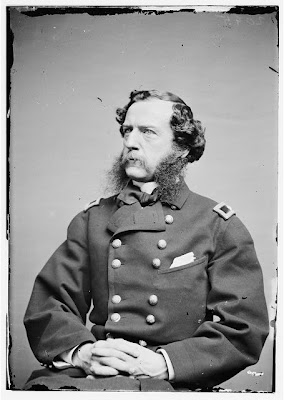
Brig. Gen. Samuel W. Crawford (courtesy of Library of Congress). Crawford was born in Franklin County, Pennsylvania in 1829. He was the surgeon in charge at Ft. Sumter during the bombardment in April 1861. Crawford joined the Union infantry and rose to brigade command by spring of 1862. He briefly led a Twelfth Corps division at Antietam until being wounded in the thigh. Following his recovery, Crawford was given command of the Pennsylvania Reserves.

On the evening of June 1, the men of the Third Brigade under Col. Joseph W. Fisher marched out of the city "to the sounds of martial music." (Columbia Spy, June 6, 1863.) The soldiers "were in fine spirits," and "cheered as they passed through [the] streets, glad again to be in the field." (Phila. Press, June 2, 1863.) Spectators along the sidewalk and in hotel windows echoed the soldiers' hurrahs for Ulysses S. Grant, Joseph Hooker, George B. McClellan, William Rosecrans, and other generals. (Columbia Spy, June 6, 1863.)

Rallying to the Defense of the Keystone State

Events soon took an alarming turn. As talk of a Confederate invasion of Pennsylvania spread, the Reserves grew anxious to leave Northern Virginia and defend their native soil against Lee's army. According to one regimental history, the thought of remaining behind in the defenses of Washington "was rather mortifying." (Woodward, Our Campaigns, 259.) Officers made entreaties to Washington and Harrisburg to have the Reserves return to the field along with the Army of the Potomac. In one instance, the commander of the 2nd Pennsylvania Reserves and his fellow officers petitioned Col. William McCandless, head of the First Brigade:
We, the undersigned. . . having learned that our mother State has been invaded by a Confederate force, respectfully ask, that you will, if it be in your power, have us ordered within the borders of our State, for her defence. 
. . . we have more than once met and fought the enemy, when he was at home. We now wish to meet him again where he threatens our homes, our families and our firesides. 
Could our wish in this behalf be realized, we feel confident that we could do some service to the State that sent us to the field, and not diminish, if we could not increase, the lustre that already attaches to our name. (Woodward, Our Campaigns, 260.)
McCandless received the petition on June 17 and "forwarded it through the proper channel to Washington." (Woodward, Our Campaigns, 259.) Meanwhile, Gens. John F. Reynolds and George G. Meade, who had both led the Reserves through the bloody trials of 1862, requested that the War Department transfer the division to their respective army corps. (See, e.g., Sypher 448; Thomson & Rauch 260; Woodward, The Third Reserve, 226.)

Col. William McCandless (courtesy of PRVC Historical Society).
At Last! -- Rejoining the Army of the Potomac

The fate of the Reserves became part of the larger question of reinforcing Hooker as he chased down Lee's army. General-in-Chief Henry W. Halleck, worried about keeping the nation's capital safe from a possible Confederate advance, maintained a tight grip on the soldiers belonging to the defenses of Washington. (Coddington 96.) In the end, Halleck relented and agreed to send Hooker around 8,400 infantry reinforcements, including two brigades of the Pennsylvania Reserves. (Sears 220.)**

Late on June 23, Hooker directed Crawford "to hold [his] command in readiness to move at very short notice," with ten days' subsistence. (OR, 1:27:3, 273.) Pickets were to remain posted "until further orders." (OR, 1:27:3, 273.) Less than two days later, Hooker put the Reserves in motion to catch up with the rest of the army, which was already in pursuit of Lee. At 9:30 in the morning on June 25, Crawford was directed to "march with your command to-day, via the Leesburg turnpike, to Edwards Ferry, and, if possible . . . cross the river at that point, should you reach the Ferry in season." (OR, 1:27:3, 309.)

Not long afterwards, Hooker was shocked to learn from Crawford that John P. Slough, military governor of Alexandria, had detained the Second Brigade of Pennsylvania Reserves. He fired off a note to Halleck, demanding that "General Slough be arrested at once" and promising that "charges will be forwarded as soon as I have time to prepare them." (OR, 1:27:1, 56.) Hooker sharply warned Halleck, "You will find, I fear, when it is too late, that the effort to preserve department lines will be fatal to the cause of the country." (OR, 1:27:1, 56.) The General-in-Chief wasted no time in brushing aside Hooker's request:
The Second Brigade, to which you refer in your telegram, forms no part of General Crawford's command, which was placed at your orders. No other troops can be withdrawn from the Defenses of Washington. (OR, 1:27:1, 57.)  
That same day, the First and Third Brigades struck camp and began their march from Fairfax Station and Upton's Hill.*** The soldiers proceeded as far as the area around Vienna, where they bivouacked for the night. (OR, 1:27:1, 143; Woodward, Our Campaigns, 261). Early the next morning the Reserves resumed their march. The Pennsylvanians moved up the Leesburg-Alexandria Turnpike, past Dranesville, where many of them had first experienced battle.**** A "violent and constant" rainfall turned the roads into "almost knee-deep" mud. (Woodward, Our Campaigns, 261.) Despite such miserable conditions, the division reached Goose Creek that night. (OR, 1:27:1, 143.) At daylight on June 27, the Reserves headed a short distance to the Potomac and crossed the river at Edwards Ferry via pontoon bridge. (OR, 1:27:3, 353.) The division pushed through Maryland and arrived that night at the mouth of the Monocacy River, "in spite of the heavy roads." (Woodward, Our Campaigns, 261; see also OR, 1:27:1, 143.) Finally, on June 28, the Reserves crossed the Monocacy and marched to Ballinger's Creek near Frederick, where they joined the Fifth Corps. (OR, 1:27:1, 144; Hardin 141.)***** By the time the Reserves caught up with the Fifth Corps, Meade had taken command of the Army of the Potomac, and Gen. George Sykes had replaced him at the head of the corps.

Detail of Edwards Ferry, Goose Creek, and vicinity from 1862 Union Army map of Northeastern Virginia (courtesy of Library of Congress).  The Leesburg Turnpike, also visible here, served as the Pennsylvania Reserves main route of march to the crossing at Edwards Ferry.
The Pennsylvania Reserves continued their movement northward through Maryland and into Pennsylvania. The division arrived at Gettysburg on July 2 during the second day of the battle. That evening, the First Brigade drove into the Plum Run Valley and beat back an assault by troops from James Longstreet's corps on the Union left near Little Round Top. Crawford himself seized the colors and led the charge. The division's overall losses at Gettysburg stood at 26 killed, 181 wounded, and 3 missing. (OR, 1:27:1, 180.) The Reserves had proven their mettle once again and made a contribution to the Confederate defeat. Before long, the Pennsylvanians would return with the rest of the army to the familiar soil of the Old Dominion. In this war, there was no staying away.

Notes

*The 11th Pennsylvania Reserves of the Third Brigade were still stationed in Northern Virginia in June, most likely in the vicinity of Vienna or Fairfax Station. (Gibbs 214-15.)

**The other units sent to Hooker from the Department of Washington included a brigade of New Yorkers under Gen. Alexander Hays and the Second Vermont Brigade under Gen. George Stannard. Both brigades would go on to distinguish themselves at Gettysburg. Halleck also agreed to furnish a division of cavalry under Gen. Julius Stahel, as well as artillery units, including the 9th Massachusetts Battery.

***The drive to replenish the ranks of the Reserves while in the defenses of Washington met with little success. (Gibbs 213; Thomson & Rauch 256-57.) The two brigades that set out on June 25 totaled just 3,817 officers and men. (Coddington 98.)

****The Battle of Dranesville took place on December 20, 1861, and pitted a brigade of the Reserves against J.E.B. Stuart's Confederates.

*****The Pennsylvania Reserves officially became the Third Division of the Fifth Corps.

Sources

Aside from the Official Records, the following sources were useful in compiling this post:

Civil War in the East (on-line database); Edwin B. Coddington, The Gettysburg Campaign: A Study in Command (1979 ed.); Columbia Spy, June 6, 1863; Joseph Gibbs, Three Years in the Bloody Eleventh: The Campaigns of a Pennsylvania Reserves Regiment (2002); Martin D. Hardin, History of the Twelfth Regiment Pennsylvania Reserve Volunteer Corps (1890); Harrisburg Daily Patriot and Union, June 27, 1863; Philadelphia Press, June 2, 1863; Stephen W. Sears, Gettysburg (2003); Jeffrey F. Sherry, "The Terrible Impetuosity: The Pennsylvania Reserves at Gettysburg," Gettysburg Magazine, Issue No. 16, Jan. 1, 1997 (courtesy of P.R.V.C. Hist. Soc.); J.R. Sypher, History of the Pennsylvania Reserve Corps (1865); O.R. Howard Thomson & William H. Rauch, History of the "Bucktails" (1906); Evan M. Woodward, History of the Third Pennsylvania Reserve (1883); Evan M. Woodward, Our Campaigns (1865).

Additional Reading

An excellent and detailed account of the Pennsylvania Reserves' march from Upton's Hill/Fairfax Station to Edwards Ferry, including maps, can be found here, at Craig Swain's Civil War blog, To the Sound of the Guns. Also be sure to check out Craig's on-going series of posts on the march of the Union army through Loudoun County in the days prior to Gettysburg.

For the full story of the Pennsylvania Reserves at Gettysburg, see "The Terrible Impetuosity: The Pennsylvania Reserves at Gettysburg," by James Sherry in Gettysburg Magazine, Issue No. 16, Jan. 1, 1997.

Thursday, May 23, 2013

The Pennsylvania Reserves in Northern Virginia 1863, Part IV: Daily Life in the Department of Washington

Today's post marks the final installment in my series on the Pennsylvania Reserves in Northern Virginia during the first half of 1863. The veteran division from the Keystone State arrived in Alexandria at the start of February 1863. The Union Army had sent the men to the Department of Washington to rest and recruit away from the front lines. As I wrote last week, the Reserves spent a lot of time on picket, fatigue, and guard duty. The constant threat of attacks by Confederate guerrillas made the work a little less than pleasant, but the men otherwise settled into the daily routine of camp life.

The weather proved uncooperative during the Reserves' first few months in Northern Virginia. As Richard Woolworth of the 4th Pennsylvania Reserves told his sister on March 22, "[s]now, hail, rain and sunshine alternately make the walking very disagreeable. We have been hoping for a change for the better but have been disappointed." A regimental history of the Bucktails recalled:
The winter. . . was remarkably severe, snow alternating with heavy rain making things generally uncomfortable. Even as late as March 31st, eighteen inches of snow were recorded; nor was this the last fall, as on April 5th, another heavy snow storm obstructed the camp. (Thomson & Rauch 245.)
All of the wet weather made for hard marching. The 2nd Pennsylvania Reserves broke camp on March 28 and headed for Fairfax Station. The distance was just four miles, but constant downpours had turned the road into a nearly impassable mess. The men "plunged through the mud up to their knees" and labored for several hours to reach their destination. (Woodward 256.) Towards the end of April, the weather began to show signs of improvement. Americus Murray of Co. H, 4th Pennsylvania Reserves told his cousins that on April 21, "[t]he Weather is pleasant and warm, the buds are opening, and the grass is growing very nicely, and I hope that we have had our last cold storm for this Spring."

Despite all of the miserable weather, the men reported generally healthy conditions in camp. Private Lewis Prall of Co. A, 1st Pennsylvania Reserves, informed his sister on March 16, "There is not much sickness here now. There is no cases of smallpox around here. All the boys are well and lively." Woolworth of the 4th felt much the same. He noted to his sister on March 22 that "we mostly enjoy good health." Of the sixteen sick soldiers, most were "very trifling cases." One man, who appeared "very low spirited" and "home sick," was sent to his family. The Bucktails, meanwhile, suffered from an outbreak of smallpox, but "the cases were few and the disease did not spread." (Thomson & Rauch 246.)

Soldiers' letters back home testify to relatively comfortable conditions in camp. Prall of the 1st Pennsylvania Reserves told his sister in March:
We have a good tent with a large fireplace in it and have six woolen blankets over us. We sleep warm at night. We get plenty to eat. We get fresh bread 3 times a week, also fresh beef besides sugar, coffee, crackers, rice, beans, salt pork, salt beef, and several other things. We have plenty to wear and will soon have plenty of money – we expect to get paid this week.
Sgt. Thomas Dick, Co. A, 12th Pennsylvania Reserves wrote to his brother on March 6 that "[w]e have comfortable quarters plenty of soft br[ea]d fresh beef and other things in proportion." Family members also supplemented the soldiers' victuals with packages from home. At the end of March, Prall "went to Alexandria to the express office and brought up 21 boxes for the regiment," including his own. The contents of Prall's package were "in good order" and "nothing was spoiled, except two or three pies was a little moldy."

Camp of the 1st Pennsylvania Reserves (30th Pennsylvania Infantry) near Fairfax Court House, June 1863 (courtesy of fold3.com; information on photo from MOLLUS-Massachusetts Civil War Photographs, U.S. Army Heritage & Education Center). 
Like all soldiers, the men of the Pennsylvania Reserves found a variety of ways to pass their down time in camp. Reading and letter writing were popular. The soldiers also bet their paychecks on card games like poker. Prall turned to a more productive past time and whittled rings from wood to send to his mother and little sister. Col. Charles Taylor of the Bucktails, who would soon fall at Gettysburg, sponsored a target shooting contest and offered a fifty cent prize to the winner. Some of the Reserves spent their free time playing baseball. Sgt. Dick of the 12th Reserves seemed rushed to finish a letter to his sister so he could enjoy the weather and check out the friendly athletic competition:
For it is such a beautiful day outside, that I can scarcely content myself to remain indoors while I write it. I can hear the loud shouts of the boys who are engaged at a game of ball while I write.
Some soldiers also took advantage of the proximity of the nation's capital. Murray of the 4th Reserves wrote to his cousins of an April trip to Washington City:
I have been in Washington to day and visited some places of interest. It is a grand sight to go over the Capitol grounds and view that noble structure, which is not yet finished, and will not be for a number of years yet. The Capitol is built of marble, and when completed will be one of the finest buildings in the world. The Capitol grounds are at present covered with a growth of fresh green grass; the parks contain a great variety of trees and shrubs, which are just putting forth their green leaves. The avenues and promenades are bordered by a great variety of flowers, many of which are already in full blossom.
A wartime view of Washington showing the unfinished Capitol dome and Trinity Episcopal Church, c. 1863 (courtesy of The Atlantic). Such sights awaited the men of the Pennsylvania Reserves who visited Washington City.
Camp life also provided time for quiet reflection. Sgt. Dick spoke for many in the Reserves when he wrote to his brother on March 6 about the sacrifices of the past year:
Our company presents quite a different appearance now to what it did when we were here before It is but a skeleton of its former self. We now draw rations for over 40 men. how does that compare with last winter when we drew rations for over 90 men; and the missing where are they? The bones of some of them black in the blood stained soil of the peninsula: Some of them repose on the disastrous plains of manasses; While others who fell at south mountain and antietam received a decent burial in the faithful old state of Maryland. I thought I had done. But others yet who perished at Fredericksburg go to swell the number in the graveyard of Virginia. There are others still who may be classed among the missing of Co H. some of them are languishing in the hospitals that have become so common in our land and others I suppose you see almost daily: some with their arms hangings powerless by their sides; and others with their limbs bent in an uncomely shape. and some with an empty coat sleeve that shows to plainly that they were members of the glorious old reserve.
Dick was all too aware of the toll that the war had taken. As he and the other soldiers continued their duty in front of Washington, an even bigger fight loomed on the horizon. Before long, many of these same men would be marching off to defend their home soil against Robert E. Lee's Confederates.

Sources

Ltr. from Thomas Dick to Brother, Mar. 6, 1863; Ltr. from Thomas Dick to Sister, Mar. 25, 1863; Ltr. from Americus Murray to Cousins, Apr. 19, 1863; Ltr. from Lewis Prall to Sister, March 16, 1863; Ltr. from Lewis Prall to Unknown (likely Sister), Apr. 1, 1863; Ltr. from Richard Woolworth to Sister, Mar. 22, 1863; O.R. Howard Thomson & William H. Rauch, History of the "Bucktails" (1906); Evan M. Woodward, Our Campaigns (1865).

Spelling and grammar are as in the original letters.

I would like to thank the Pennsylvania Reserve Volunteer Corps Historical Society for publishing all of the letters referenced in this post. This group is doing invaluable work to preserve the story of the Reserves. Please check out the society's website and lend your support.